
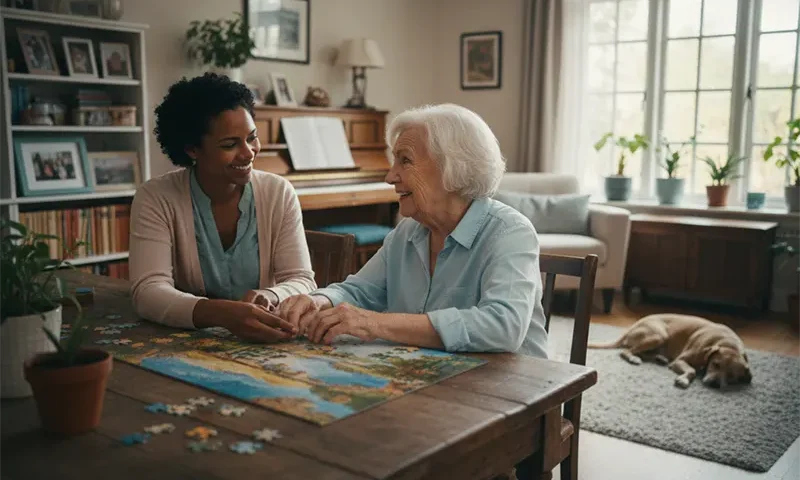
Non-Medical Companion Care for Early-Stage Dementia at Home: Preserving Independence and Joy
Receiving a diagnosis of early-stage dementia—whether Alzheimer’s, vascular dementia, or another form—is a life-altering event for both the individual and their family. In 2026, the focus of dementia care has shifted dramatically toward aging in place. While medical intervention is necessary, the vast majority of daily needs for those in the early stages are not clinical, but social and functional.
Non-medical companion care has emerged as a cornerstone of this approach, providing the bridge between complete independence and the structured environment of a facility. By focusing on “what remains” rather than “what is lost,” companion care allows seniors to navigate their changing world with confidence and dignity.
1. What is Non-Medical Companion Care?
Unlike home health care, which involves skilled nursing or physical therapy, non-medical companion care focuses on Activities of Daily Living (ADLs) and emotional support. For early-stage dementia, this care is less about “doing for” the senior … READ MORE
