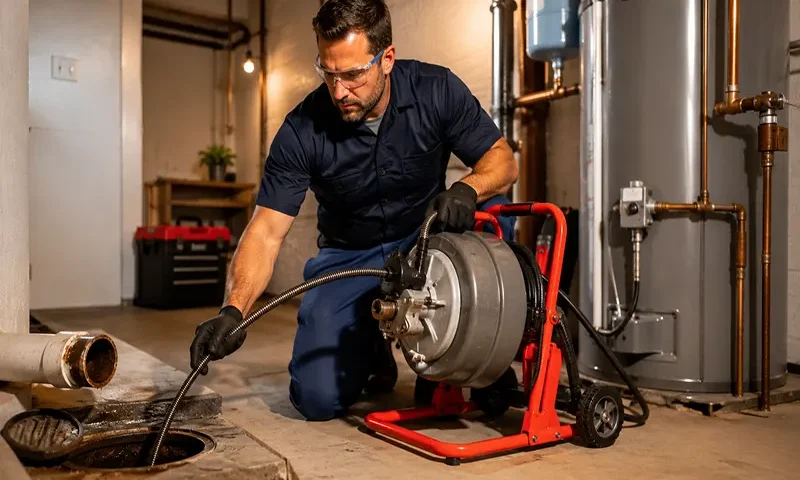
Step-by-step guide to replacing a leaking kitchen pull-down faucet

1. Tools and Materials Needed

Before you begin, gather these essential tools. Working under a sink is cramped, so having everything within reach is key.

  • New Pull-Down Faucet Kit (Ensure it matches your sink’s hole configuration: 1-hole or 3-hole).
  • Basin Wrench: Specifically designed to reach the mounting nuts tucked high behind the sink basin.
  • Adjustable Wrench: For disconnecting and reconnecting water supply lines.
  • Screwdrivers: Both Phillips and flathead.
  • Flashlight or Headlamp: Crucial for visibility in dark cabinets.
  • Plumber’s Tape (Teflon Tape): To ensure watertight threaded connections.
  • Bucket and Towels: To catch residual water in the lines.
  • Penetrating Oil (Optional): Such as WD-40, if your old mounting nuts are rusted or stuck.

2. Preparation: Safety and Space

Start by clearing everything out from under your sink. You need a clear workspace to lie down and see the connections.

  1. Shut Off the Water: Locate the hot and cold shut-off valves under the
READ MORE
Respite Care Services for Family Caregivers of High-Needs Adults

In the landscape of 2026 healthcare, the role of the family caregiver has never been more critical—or more demanding. For those supporting “high-needs” adults—individuals with advanced dementia, severe physical disabilities, or complex chronic conditions—the responsibility is often a 24/7 commitment. While deeply rewarding, the relentless nature of this work can lead to “caregiver burnout,” a state of physical, emotional, and mental exhaustion that compromises the health of both the caregiver and the recipient.

Respite care is the strategic intervention designed to prevent this. By providing temporary, professional relief, respite care allows family caregivers to step away, recharge, and attend to their own lives, ensuring that caregiving remains a sustainable act of love rather than a burden of necessity.

1. Defining “High-Needs” in the Respite Context

A “high-needs” adult typically requires assistance with multiple Activities of Daily Living (ADLs) and often has specialized medical or behavioral requirements. This may include:

  • Total
READ MORE
Eco-friendly roof shingle repair for storm-damaged homes

1. The Environmental Case for Sustainable Repair

The roofing industry is a significant environmental actor. Standard asphalt shingles are petroleum-based, and their production is energy-intensive. When these are ripped off during a storm, they usually head straight to the dump.

By opting for eco-friendly repairs, you participate in a circular economy. This involves using shingles made from post-consumer waste—like recycled rubber tires or plastic—which are often more durable and weather-resistant than the original materials they replace.

2. Top Eco-Friendly Materials for Storm Repair

If your roof has missing or damaged shingles, you don’t have to settle for standard replacements. Many sustainable options can be “spot-repaired” into existing roofs:

A. Recycled Rubber Shingles

Often made from up to 95% recycled content (primarily old tires), these shingles are a favorite in 2026 for storm-prone areas.

  • Durability: They are inherently impact-resistant, often carrying a Class 4 hail rating, meaning they can
READ MORE
Holistic Wellness-Focused Home Care Plans for Aging in Place

In the early decades of the 21st century, “home care” was often synonymous with basic task management—helping a senior bathe, ensuring they took their pills, and preparing a simple meal. However, as we navigate 2026, a profound shift has occurred. The modern senior doesn’t just want to “survive” at home; they want to thrive.

Holistic wellness-focused home care is the new standard. It treats the individual not as a collection of symptoms, but as a whole person with emotional, social, and spiritual needs. By integrating physical health with mental stimulation and environmental harmony, these plans provide a roadmap for a vibrant, independent life.

1. The Four Pillars of a Holistic Home Care Plan

A truly holistic plan is built on four interconnected pillars. If one is neglected, the others inevitably suffer.

Pillar I: Physical Vitality and Adaptive Movement

Physical care in a holistic plan goes beyond preventing falls. It focuses … READ MORE

How to repair hairline cracks in poured concrete foundations

1. Diagnostics: Is It Truly a Hairline Crack?

Before you reach for the repair kit, you must categorize the crack.

  • Hairline Cracks: Usually vertical or diagonal, following a straight or slightly jagged path. These are perfect for DIY repair.
  • Structural Cracks: If a crack is wider than 1/4 inch, runs horizontally across the wall, or if one side of the crack is pushing inward further than the other (offset), you should consult a structural engineer. These often indicate soil pressure issues that an injection kit cannot fix.

2. Choosing Your Material: Epoxy vs. Polyurethane

When repairing foundation cracks, you have two primary chemical options. Choosing the right one depends on the “status” of the crack.

Epoxy Injection

  • Best for: Structural reinforcement.
  • How it works: Epoxy is incredibly strong—stronger than the concrete itself once cured. It bonds the two sides of the crack together.
  • Downside: It cures slowly and must be
READ MORE