
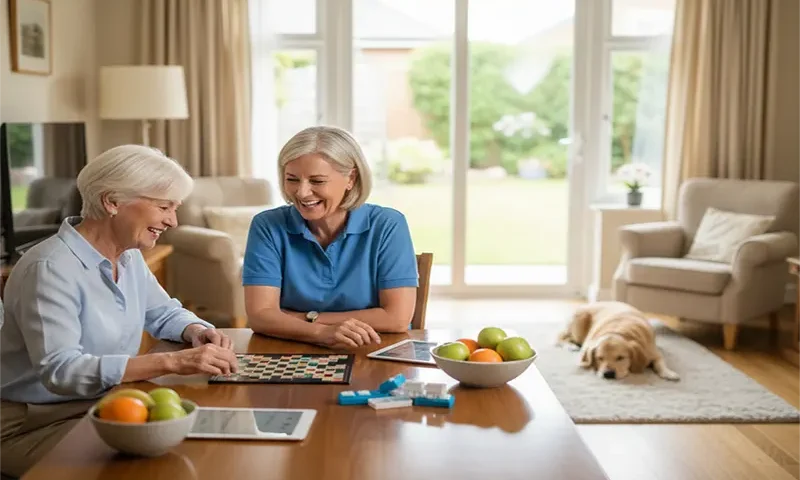
By strategically combining community-based services, cutting-edge technology, and home modifications, it is possible to provide a safe, high-quality environment for seniors that often costs significantly less than a residential facility.
1. The Cost Comparison: Home vs. Assisted Living
To understand the savings, we must look at the 2026 cost landscape. While full-time (24/7) in-home professional care is expensive, most seniors only require specific “gap” coverage.
| Care Type (2026 Estimates) | Monthly Cost | Annual Cost |
| Assisted Living (Median) | $6,313 | $75,756 |
| Adult Day Health Care | $2,300 | $27,600 |
| Home Health Aide (44 hrs/week) | $6,878 | $82,536 |
| Hybrid Care (Tech + 15 hrs/week care) | $2,800 | $33,600 |
2. Pillar 1: Leveraging Adult Day Wellness Hubs
In 2026, “Adult Day Care” has evolved into Wellness Hubs. These centers provide medical supervision, physical therapy, and social engagement during business hours.
- The Savings: Instead of paying for a facility’s “room and board” 24/7, families pay only for the hours needed.
- The Benefit: It provides the senior with vital social stimulation—combatting the isolation that often plagues those aging in place—while allowing family caregivers to continue working.
3. Pillar 2: “Invisible” Technology as a Force Multiplier
Technology in 2026 acts as a “digital caregiver,” reducing the need for expensive overnight or 24/7 in-person staff.
- Ambient Intelligence: Wall-mounted sensors (no cameras) track movement and sleep patterns. AI detects subtle changes—like frequent bathroom trips that might indicate a UTI—before they become emergencies.
- AI Companions: Devices like ElliQ provide social interaction and medication reminders, reducing the “companion” hours needed from paid staff.
- Remote Patient Monitoring (RPM): Vitals are sent directly to a clinical team, allowing for “Hospital-at-Home” interventions that prevent the $15,000 cost of a hospital readmission.
4. Pillar 3: Home Modifications as a One-Time Investment
A major reason seniors move to assisted living is a lack of accessibility in their own homes. A one-time investment in modifications is often equivalent to just 2–3 months of assisted living fees.
- Low-Cost Fixes: Removing throw rugs, adding high-wattage LED lighting, and installing lever-style door handles.
- Strategic Upgrades: Walk-in tubs, stairlifts, and widening doorways.
- Financial Tip: In 2026, many Medicare Advantage plans and VA Aid & Attendance benefits have expanded to cover a portion of these “environmental adaptations.”
5. Pillar 4: Community-Based Services and “Village” Models
The “Village” movement involves neighborhood cooperatives where members pool resources to share the costs of services.
- Shared Caregiving: Neighbors coordinating to hire one aide for 3–4 different households in the same block, significantly lowering the hourly rate.
- Non-Profit Support: Organizations like the All Seniors Foundation leverage volunteer networks for grocery delivery and transportation, removing these “homemaker” costs from the professional care bill.
6. Navigating the 2026 Benefit Landscape
To make home care cost-effective, families must maximize available public and private funding:
- Medicaid HCBS Waivers: These “Home and Community-Based Services” waivers are designed specifically to keep people out of facilities by paying for in-home aides and modifications.
- Long-Term Care Insurance (LTCI): Modern policies in 2026 are increasingly “indemnity-based,” paying a daily cash benefit that can be used for family caregivers or tech subscriptions.
- Program of All-Inclusive Care for the Elderly (PACE): This program provides the entire spectrum of medical and social services to seniors who are frail enough to meet “nursing home level of care” but wish to stay home.
Designing Your Hybrid Plan
The most cost-effective alternative to assisted living is not “doing it all yourself,” but creating a Hybrid Care Plan. By combining 15 hours of professional help with a $200/month technology suite and 2 days a week at a Wellness Hub, you can achieve a level of safety and engagement comparable to assisted living for nearly 50% less cost.

