
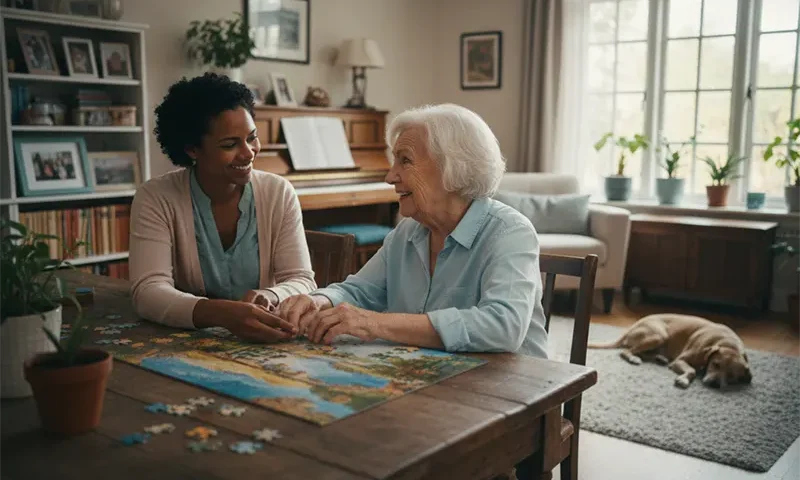
Receiving a diagnosis of early-stage dementia—whether Alzheimer’s, vascular dementia, or another form—is a life-altering event for both the individual and their family. In 2026, the focus of dementia care has shifted dramatically toward aging in place. While medical intervention is necessary, the vast majority of daily needs for those in the early stages are not clinical, but social and functional.
Non-medical companion care has emerged as a cornerstone of this approach, providing the bridge between complete independence and the structured environment of a facility. By focusing on “what remains” rather than “what is lost,” companion care allows seniors to navigate their changing world with confidence and dignity.
1. What is Non-Medical Companion Care?
Unlike home health care, which involves skilled nursing or physical therapy, non-medical companion care focuses on Activities of Daily Living (ADLs) and emotional support. For early-stage dementia, this care is less about “doing for” the senior and more about “doing with” them.
The goal is to provide a supportive presence that minimizes the anxiety of memory loss while ensuring the home environment remains safe and stimulating.
2. The Core Pillars of Early-Stage Support
In the early stages, symptoms often include mild forgetfulness, difficulty with complex tasks, and mood changes. Companion care addresses these through four specific pillars:
A. Cognitive Engagement and “Brain Fitness”
The adage “use it or lose it” applies heavily to cognitive health. A companion doesn’t just sit with the senior; they act as a “cognitive coach.”
- Reminiscence Therapy: Using photo albums, music, or familiar scents to trigger positive memories and encourage storytelling.
- Interactive Hobbies: Engaging in strategic games like bridge, or creative outlets like painting, which help maintain fine motor skills and neural pathways.
B. Routine and Structure
Dementia thrives on confusion, but it is defeated by routine. A companion helps establish a “rhythm of the day” that reduces the “sundowning” effect (increased agitation in the late afternoon).
- Meal Preparation: Helping the senior cook familiar recipes, ensuring they are eating nutritiously and staying hydrated.
- Household Management: Assisting with light housekeeping and organization to prevent the senior from feeling overwhelmed by a cluttered environment.
C. Safety Oversight without Intrusion
Safety in the early stage is about preventing accidents before they happen.
- Medication Reminders: While companions cannot administer medication, they provide vital prompts to ensure doses aren’t skipped or doubled.
- Transportation: Providing a safe way to reach appointments, grocery stores, or social clubs, allowing the senior to maintain their social life even if they can no longer drive.
D. Emotional Support and Respite
The psychological toll of dementia is significant. Seniors often feel a loss of agency. A companion offers a non-judgmental ear, providing a safe space for the senior to express frustration or fear without worrying about upsetting a spouse or child.
3. The Impact on Family Caregivers
One of the most overlooked benefits of companion care is the preservation of the family dynamic. When a daughter becomes a full-time “warden” for her father, the father-daughter relationship suffers.
By bringing in a professional companion, the family can return to their primary roles as loved ones. It provides essential respite care, preventing caregiver burnout—a condition that often leads to premature institutionalization of the senior.
Statistics Note: Studies show that families utilizing at least 10 hours of companion care per week report a 40% reduction in caregiver-related stress and a significant delay in the transition to memory care facilities.
4. Technology Integration in 2026
Modern companion care is often augmented by “smart home” technologies. In 2026, companions use integrated platforms to:
- Track Patterns: Using AI-linked apps to note changes in appetite or sleep patterns that might indicate a progression in symptoms.
- Virtual Inclusion: Setting up video calls with distant family members to ensure the senior remains part of the family circle.
- Smart Reminders: Coordinating with voice assistants (like Alexa or Google) to provide gentle audio cues for the senior when the companion is in another room.
5. Tailoring the Care Plan: The “Person-Centered” Approach
No two cases of dementia are identical. An effective companion care plan is highly personalized.
| Care Category | Early-Stage Focus | Transition Sign (Mid-Stage) |
| Communication | Encouraging conversation; finding lost words. | Using simpler sentences; non-verbal cues. |
| Activities | Complex puzzles; visiting museums; light exercise. | Sensory activities; tactile engagement (folding towels). |
| Autonomy | Senior makes choices for meals and outfits. | Companion offers two specific choices to prevent overwhelm. |
6. How to Choose the Right Companion
Finding a match is as much about personality as it is about skill. When interviewing a companion or agency, look for:
- Dementia-Specific Training: Do they understand the “validation method” versus “reality orientation”?
- Shared Interests: If the senior loves jazz, a companion with a musical background will be far more effective.
- Consistency: For someone with memory loss, seeing the same face every day is crucial for building the trust necessary for successful care.
Building a Bridge to the Future
Non-medical companion care is not about “babysitting” the elderly; it is about providing the scaffolding that allows a person with early-stage dementia to continue living a life of purpose. It honors the individual’s history while navigating their new reality with patience and expertise. By investing in companion care early, families aren’t just managing a disease—they are protecting a quality of life.

