
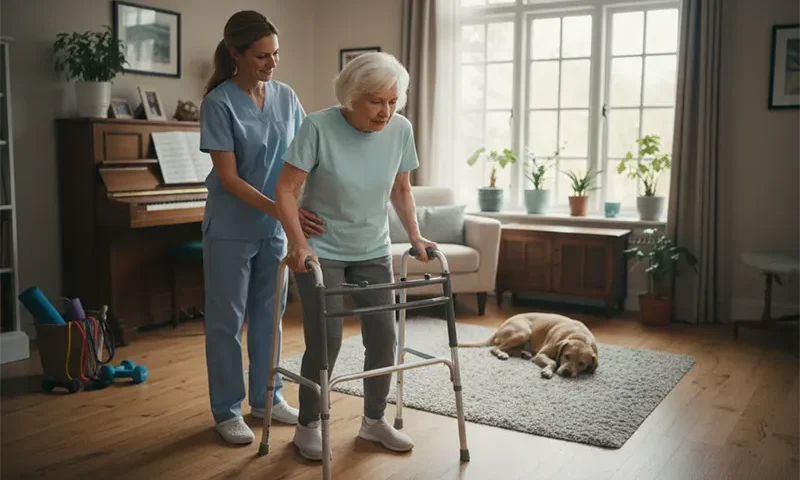
For an elderly individual, a hip replacement is more than a surgical procedure; it is a gateway to restored mobility and the elimination of chronic pain. However, the surgery is only half the battle. The weeks following discharge are the most critical. In 2026, the trend has shifted heavily toward In-Home Post-Operative Rehabilitation, allowing seniors to recover in a familiar environment while utilizing “Hospital-at-Home” protocols that rival the care found in inpatient facilities.
1. Setting the Stage: The “Pre-hab” and Home Modification
Rehabilitation begins before the patient even enters the operating room. Preparing the home environment is the first step in preventing the most common post-op complication: the accidental fall.
Critical Home Adjustments:
- The “Recovery Zone”: Set up a primary living area on the ground floor to avoid stairs for the first 2–3 weeks. This area should include a firm chair with armrests (avoid soft sofas) and a high seat height.
- Path Clearing: Remove all throw rugs, electrical cords, and clutter from walking paths.
- Bathroom Safety: Install a raised toilet seat and a stable shower chair.
2. The First 48 Hours: Managing the Basics
The immediate goal after returning home is pain management and the prevention of blood clots (Deep Vein Thrombosis).
- Medication Adherence: Elderly patients often have complex medication schedules. Using smart pill dispensers that alert both the patient and a remote nurse ensures that anticoagulants (blood thinners) and pain relief are taken precisely on time.
- Cryotherapy (Icing): Modern recovery often uses “Cold Compression” machines—wraps that circulate ice water and provide rhythmic compression to the hip to significantly reduce swelling.
- Ankle Pumps: Patients are taught to flex their feet up and down frequently. This simple movement is the first “exercise” and is vital for maintaining circulation.
3. The Role of the In-Home Physical Therapist (PT)
In 2026, physical therapy is a hybrid of in-person visits and Telerehab. A therapist typically visits the home twice a week to manually assess the incision site and joint range of motion, while “Digital PT” platforms guide the patient through daily exercises using motion-tracking sensors.
Key Phases of Physical Therapy:
- Phase 1 (Weeks 1-2): Protected Weight Bearing. Focus is on using a walker correctly and performing “quad sets” (squeezing the thigh muscle) and “gluteal sets.”
- Phase 2 (Weeks 3-6): Functional Strengthening. Transitioning from a walker to a cane. Exercises move toward “standing hip abductions” and mini-squats.
- Phase 3 (Week 6+): Endurance and Balance. Returning to normal gait patterns and practicing “asymmetrical” tasks, like stepping over small obstacles.
4. Understanding “Hip Precautions”
Depending on the surgical approach (Anterior vs. Posterior), the surgeon will issue specific movement restrictions to prevent dislocation. For the elderly, remembering these can be a challenge.
The 90-Degree Rule: For a posterior approach, patients must not bend their hip more than 90 degrees. This means no sitting on low chairs, no leaning forward while sitting, and no picking items up off the floor without a “reacher” tool.
Companions and caregivers play a vital role here by providing “verbal cues” when they see the senior about to break a precaution.
5. Nutritional Support for Tissue Repair
Healing a major joint and bone requires a significant caloric and protein “surplus.” Elderly patients often have diminished appetites, making this a hurdle.
- Protein Synthesis: Aim for high-quality protein (lean meats, beans, or Greek yogurt) at every meal to repair the muscles cut during surgery.
- Hydration: Dehydration is a leading cause of post-operative confusion (delirium) in seniors.
- Vitamin C and Zinc: These are essential for collagen formation and skin healing at the incision site.
6. Remote Patient Monitoring (RPM) in 2026
One of the greatest fears for a senior recovering at home is “What if something goes wrong?” In 2026, technology provides the answer.
- Smart Bandages: Some incisions are now covered with “smart” dressings that monitor the pH level and temperature of the wound. If the temperature rises (an early sign of infection), an alert is sent directly to the surgeon’s office.
- Gait Analysis Wearables: Small sensors on the shoes or ankles track how much weight the patient is putting on the new hip and their “symmetry” while walking, allowing the PT to adjust the exercise plan remotely.
7. The Psychological Component: Post-Op Blues
It is common for seniors to experience a dip in mood or “post-op blues” around week two. The initial “adrenaline” of the surgery wears off, and the reality of the long recovery sets in.
- Social Connectivity: In-home companions help by keeping the senior engaged in hobbies that don’t require movement, such as reading or tablet-based games.
- Milestone Tracking: Therapists and family should celebrate small wins—the first time the patient walks to the mailbox or the first day they use a cane instead of a walker—to maintain motivation.
8. Warning Signs: When to Call the Doctor
While home rehab is safe, certain “Red Flags” require immediate medical attention:
- Sudden, severe pain in the calf or thigh (potential blood clot).
- Shortness of breath or chest pain.
- Redness, foul-smelling drainage, or heat at the incision site.
- A sudden “popping” sound followed by an inability to move the leg (potential dislocation).
The Road Back to Joy
In-home rehabilitation for a hip replacement is a marathon, not a sprint. For an elderly patient, success is measured not just by the absence of pain, but by the ability to once again walk to the park, play with grandchildren, and navigate their own home with confidence. By combining disciplined physical therapy, a safe home environment, and the latest in 2026 monitoring technology, the “golden years” can remain active and mobile.

