
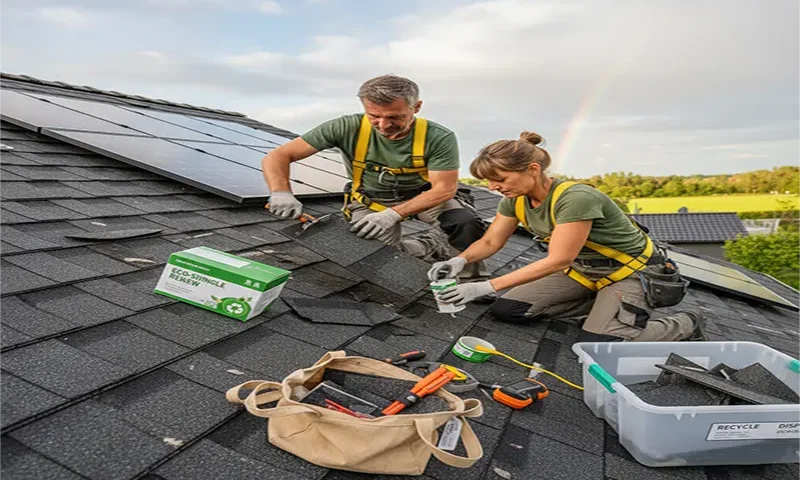
1. The Environmental Case for Sustainable Repair
The roofing industry is a significant environmental actor. Standard asphalt shingles are petroleum-based, and their production is energy-intensive. When these are ripped off during a storm, they usually head straight to the dump.
By opting for eco-friendly repairs, you participate in a circular economy. This involves using shingles made from post-consumer waste—like recycled rubber tires or plastic—which are often more durable and weather-resistant than the original materials they replace.
2. Top Eco-Friendly Materials for Storm Repair
If your roof has missing or damaged shingles, you don’t have to settle for standard replacements. Many sustainable options can be “spot-repaired” into existing roofs:
A. Recycled Rubber Shingles
Often made from up to 95% recycled content (primarily old tires), these shingles are a favorite in 2026 for storm-prone areas.
- Durability: They are inherently impact-resistant, often carrying a Class 4 hail rating, meaning they can withstand future storms better than asphalt.
- Sustainability: A single roof repair can divert dozens of tires from the landfill.
B. Composite/Synthetic Shingles
These are engineered from a mix of recycled plastics and hemp or wood fibers.
- Aesthetic: They can perfectly mimic the look of slate or cedar shakes, allowing you to maintain your home’s curb appeal while using 100% recyclable materials.
- Longevity: These typically last 50+ years, reducing the frequency of future repairs.
C. “Cool” Reflective Shingles
If you must use asphalt for a partial repair, look for Cool Roof Rating Council (CRRC) certified shingles. These are coated with reflective granules that bounce solar radiation back into the atmosphere. This reduces the “Urban Heat Island” effect and lowers your home’s cooling costs during the summer.
3. Sustainable Adhesives and Sealants
A roof repair is only as good as the “glue” holding it together. Traditional roofing cement often contains high levels of Volatile Organic Compounds (VOCs) and solvents that off-gas into the air.
In 2026, contractors are switching to Bio-based and Low-VOC Sealants:
- Polyether Sealants: These are non-toxic, solvent-free, and can often be applied to damp surfaces—a major advantage when repairing a roof immediately after a rainstorm.
- Soy-based Adhesives: Emerging as a renewable alternative to petroleum-based glues, these provide a strong bond without the chemical odor or environmental footprint.
4. The DIY Eco-Repair Process
For minor storm damage, such as a few lifted or missing shingles, a sustainable DIY approach is possible:
- Source Recycled Patches: Buy a single bundle of recycled composite shingles that match your current roof color.
- Use Manual Tools: To keep the “carbon footprint” of the repair low, use a manual pry bar to lift damaged shingles rather than power tools.
- Apply Eco-Sealant: Use a low-VOC cartridge (like those from Chem Link or Geocel) to seal down the new shingles.
- Recycle the Waste: Do not throw the old, damaged shingles in the trash. Look for a local asphalt shingle recycling center. In many regions, these are ground down to create “Hot Mix Asphalt” for paving roads.
5. Maximizing ROI with Incentives
In 2026, many local governments and insurance providers offer incentives for choosing resilient, eco-friendly materials after a disaster:
- Tax Credits: Federal programs often provide credits for “Cool Roof” installations.
- Premium Discounts: Because recycled rubber and composite shingles are highly impact-resistant, some insurance companies offer lower monthly premiums for homes that use them, as they are less likely to claim for hail damage in the future.
6. Professional Assistance: Finding a “Green” Roofer
When hiring a contractor for storm damage, ask specifically about their waste diversion rate. A reputable eco-friendly roofer will:
- Provide a plan for recycling 100% of the torn-off materials.
- Use drones for inspections to reduce the need for multiple trips and equipment.
- Suggest “Cool” or “Impact-Resistant” upgrades as part of the repair estimate.
Resilience Meets Responsibility
Storm damage is stressful, but it provides a unique window to upgrade your home’s “envelope” for the future. By choosing recycled shingles and non-toxic sealants, you aren’t just fixing a leak; you are building a more resilient, energy-efficient home. Eco-friendly roofing proves that we can protect our families from the elements while simultaneously protecting the environment.

