
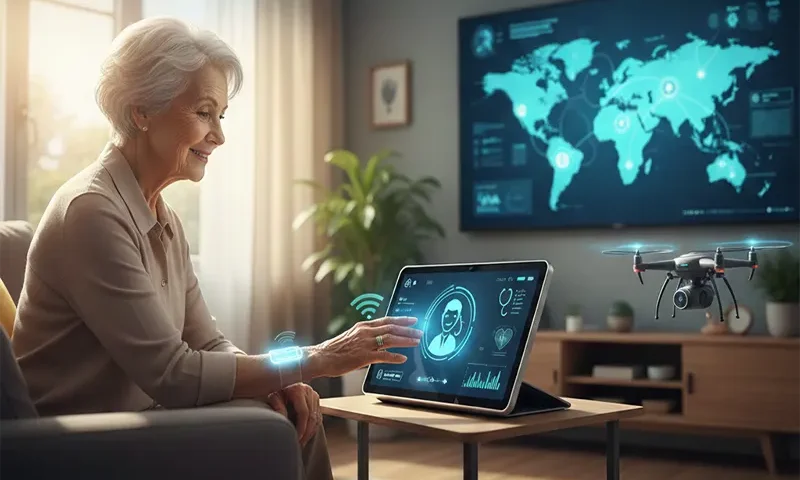
For decades, the standard trajectory for seniors with chronic conditions or mobility issues was a transition from the family home to an assisted living facility or nursing home. However, as we move through 2026, a technological revolution is rewriting this narrative. AI-powered Remote Patient Monitoring (RPM) has emerged as the cornerstone of “Aging in Place,” providing a digital safety net that allows home-bound seniors to remain in their preferred environment while receiving hospital-grade oversight.
1. The Shift from Reactive to Proactive Care
Traditional healthcare for home-bound seniors has historically been reactive. A patient waits for a scheduled visit or, worse, an emergency event before receiving medical attention. AI-powered RPM shifts this paradigm to proactive management.
By using a network of interconnected sensors and wearables, AI systems continuously collect data on vital signs such as heart rate, blood pressure, oxygen saturation, and glucose levels. Unlike human caregivers who can only check these metrics periodically, AI never sleeps. It establishes a personalized “baseline” for each senior and uses machine learning algorithms to detect subtle deviations—often days before physical symptoms manifest.
Example: An AI system might notice a gradual decrease in a patient’s step count and a slight increase in resting heart rate over 48 hours. While these changes are too small for the patient to feel, the AI identifies them as early markers of a potential urinary tract infection (UTI) or impending heart failure exacerbation, triggering a nurse’s intervention before an ER visit becomes necessary.
2. Key Technologies Defining the 2026 Landscape
The efficacy of modern RPM is driven by the convergence of several advanced technologies:
- Ambient Sensing (Non-Wearables): Many seniors find wearables uncomfortable or forget to charge them. In response, 2026 has seen the rise of “ambient intelligence.” These are radar-based or infrared sensors placed on walls or ceilings that track movement, gait speed, and even respiration rates without the need for cameras or body-worn devices.
- Predictive Fall Analytics: Falls are the leading cause of injury among seniors. Beyond just detecting a fall after it happens, AI now analyzes gait stability and “near-miss” stumbles to predict the high probability of a future fall, allowing physical therapists to intervene with strength-training exercises.
- Edge Computing: To ensure privacy and speed, much of the data processing now happens on the device itself (the “edge”) rather than the cloud. This means immediate alerts for life-threatening events, like a sudden drop in heart rate, occur in milliseconds.
3. Addressing the “Caregiver Gap”
The global shortage of nursing staff and home health aides is a well-documented crisis. AI-powered RPM serves as a force multiplier for the existing workforce.
In a traditional model, a home health nurse might manage 15 to 20 patients. With AI-driven triaging, that same nurse can oversee 50 to 100 seniors. The AI acts as a digital filter, automatically sorting data and flagging only the “high-risk” cases for human review. This ensures that clinical resources are directed exactly where they are needed most, reducing burnout among healthcare providers and lowering costs for families.
4. Mental Health and Social Connectivity
Home-bound status often leads to social isolation, which is as detrimental to health as smoking 15 cigarettes a day. Modern AI-RPM platforms are now integrating Natural Language Processing (NLP) and virtual assistants to combat this.
- AI Companions: Voice-activated systems can engage seniors in daily check-ins, asking about their mood or reminding them of medication. These interactions are analyzed for changes in speech patterns or vocabulary, which can be early indicators of cognitive decline or depression.
- Virtual “Family Portals”: These systems aggregate health data into easy-to-read dashboards for family members living far away. Knowing that their loved one is “in the green” provides immense peace of mind, while “nudges” from the app can encourage family members to call when the AI detects the senior hasn’t spoken to anyone in a few days.
5. Overcoming Challenges: Privacy and Literacy
Despite the benefits, the adoption of AI in elder care is not without hurdles. Two primary concerns dominate the conversation in 2026:
- Data Security: Protecting sensitive health data is paramount. The industry has moved toward Zero-Trust Architecture and blockchain-based logging to ensure that only authorized clinicians can access a senior’s vitals.
- Digital Literacy: Tech for seniors must be “invisible.” The most successful AI-RPM solutions require zero setup from the user. Devices come pre-configured and “heartbeat” sensors are embedded in common household items like mattresses or bathroom mirrors, removing the friction of learning new software.
6. The Economic Impact
The financial argument for AI-RPM is becoming undeniable. By reducing hospital readmissions—which can cost upwards of $15,000 per stay—and delaying the need for expensive long-term care facilities, AI-powered monitoring is saving the healthcare system billions. For the individual, it represents a significantly more affordable alternative to 24/7 in-person care.
A New Era of Dignity
AI-powered remote patient monitoring is more than just a collection of gadgets; it is a movement toward dignity and autonomy. For home-bound seniors, it means the difference between being a “patient” in a clinical facility and being a “resident” in their own home. As AI continues to refine its predictive capabilities, the home will truly become the primary hub of the healthcare system.

